
The 2025 dating sim Date Everything! is a cozy experience, set in your own home. The set-up is simple. You can date every object in the house, from your wall and ceiling to your coffee machine. The game features 100 dateable characters, each completely voice-acted. The characters have their own drama as well. From Florence (your floor) crushing on Celia (the ceiling), to a bickering washer and dryer in your laundry room.
It’s a simple premise, but an effective one. Playing the game was both hilarious and surprising. Each object appears as a different type of anthropomorph character. One major joy of the game is finding out how basic objects, such as your ceiling or chair, are given a character design and personality. The character designs are visually stunning and always on point. Game Radar Reviewer Oscar Taylor-Kent describes the game as “a masterclass in character design, full of characters that I love meeting”, and I could not agree more. The game also got me thinking about objects and our emotional relationships to them.
What does Date Everything! tell us about things? What does it convey about our home, our stuff and our relationships? I have a lot of thoughts about this after finishing the game last week, so let’s dive right into it!
Please note that this article contains spoilers for Date Everything!

Character Love
At the start of the game, you work remotely for Valdivian, a major tech company. Your job only lasts briefly and you get replaced by AI. Things change when a mysterious stranger sends you a parcel, the prototype of pair of Valdivian’s “Dateviator” glasses. These glasses allow you to D.A.T.E. an object, a short-hand for “Directly Acknowledge a Thing’s Existence”. Of course the glasses also have a personality, the bubbly Skylar who walks you through the game and acts as your main companion character.
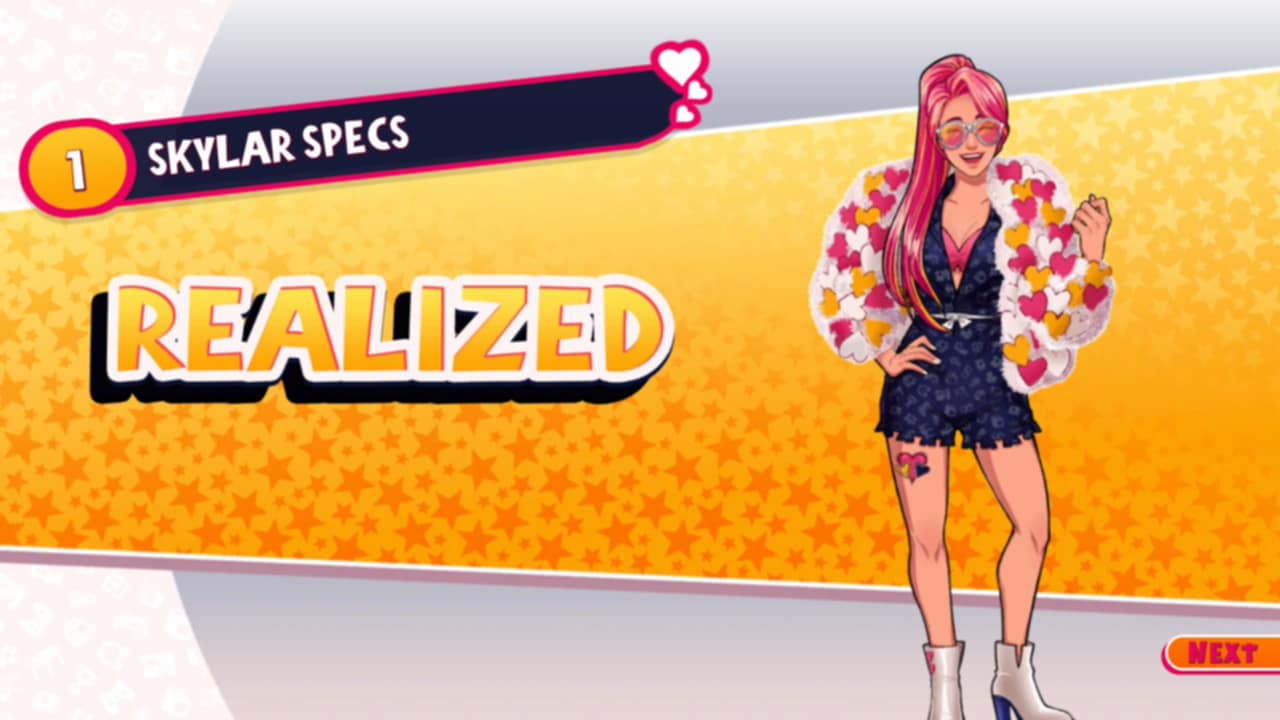
Date Everything! allows players to have different types of relationships with characters. You can befriend them, love them or hate them, which adds an interesting nuance to the game. A player gets S.P.E.C.S. points no matter their choices, which also helps build these different relationships in a guilt-free way. While I was happy to date many characters, I appreciated that I could hate my preposterous shower and sink without the game punishing me for it. These S.P.E.C.S. points help in choosing certain options but are also crucial in“realizing” the characters, and turning them into real humans.
The game explicitly refers the Japanese trope Gijinka (擬人化), which is when non-human characters are represented in a human way. A Pokémon, a train, food – anything can be anthropomorphized. In many cultures, this idea is common but in Japanese culture it is very common to find gijinka and character mascots (キャラ) related to objects, villages and events. One could argue that Date Everything! also has a great deal of “moe anthropomorphism” (萌え擬人化), which pairs the character representations with fannish desire. In his study of the “moe” concept, Patrick Galbraith describes his as intimately connected to Japanese otaku culture. Moe is a purposeful flattening of characters, allowing for projection and desire by fans. “Moe is a response to kyara, or characters without context or depth, and is made possible by flattening characters to surfaces upon which to project desires.”
Admittedly, it’s a bit of a paradox that I noticed throughout my work on different fan culture as well. As players and fans, we connect to flat characters on a deep level. Character types allow for recognizability, while still allowing us to fantasize about their specific qualities, their relationships and backgrounds. It unlocks our creative drives as fans, who want to explore these characters further in our own works.
In gaming, these affective relationships are often capitalized upon through companion characters and dateable characters. Just think of the rise of mobile otome games, such as Love and Deepspace, which are all about advancing the relationships with our favorite characters. Joleen Blom has done some great scholarship on these type of games, and you can listen to a podcast on character relationships that she and I recorded a little while back. Our scholarship reveals that players can have parasocial relationships with characters that are meaningful and intimate. Even though these connections might be one-sided, they support us in socializing, emotional labor and provide a creative boost.
Like many dating sims, Date Everything! explores these relationships, and it even does so in a self-aware way by referring gijinka and thing theory multiple times. This dating sim is not alone in creating anthropomorph relationships with a dash of comedy. For instance, I conducted a study on Hatoful Boyfriend, where players date different birds. The past years, I dated sushi, dinosaurs and tanks. Still, Date Everything! reminds me most of the iconic dating sim Dream Daddy. The writing strikes a good balance between comedy and sincere, deep interactions with characters.
Though there are 100 characters in Date Everything!, most relationships have an emotional depth and each feels unique and surprising. Characters address their traumas, their wishes and their ambitions. Each contemplates their identity and you can help them grow, or hate on them. While some characters have simple plot lines, I did feel there was a great deal of variation in this game and many different relationships to explore. In fact, our relationships to different objects are quite different, and the game reflects this.
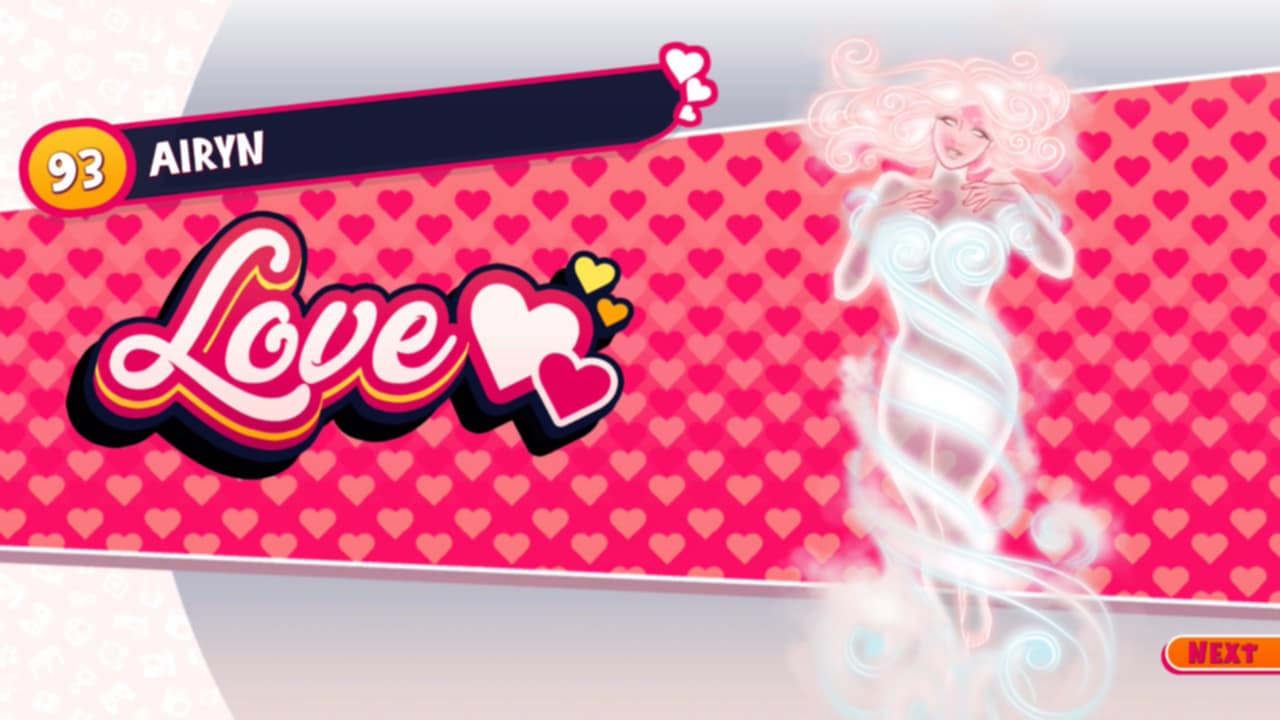
Commodities, Coziness and Coming Home
As the game shows us, things and stuff come in different shapes. What we discard is waste or trash, what we store is a memory and what we interact with is an interface. In the introduction to Things in Culture, Culture in Things, Patrick Laviolette writes:
“The relationships we develop and share with a tangible arena of artworks, buildings, infrastructures, monuments, relics and everyday trinkets varies from the remote to the intimate, from the fleeting to the durable, from immediate to mediated, from the passive to the passionate, from the philosophized to the commonsensical. Hence our journeys through the material world generate a multitude of emotions and sensations: pleasure, attachment, belonging, angst, envy, exclusion, loathing and fear are amongst some” (13-14).
Date Everything! reflects these emotional journeys with stuff and material culture. For example, the boxes of memories (Memoria) that we store on our attic and need to sort through. The grouchy trash (Cam) whose value we have to confirm. The fascinating dust (Dolly) under our couch. The junk drawer, Jerry, that has to be decluttered. The plot lines relate to these relationships. Memoria asks us to clean up her boxes. Which memory do we keep? Which is trash? We are encouraged to reflect on these relationships and what makes something precious, or junk. Jerry the junk drawer’s plotline is similar, in that that it asks us to upcycle the junk into new objects to allow for new relationships, meanings and uses.
Our relationships with food and fashion are likewise questioned in subtle ways. Once washed, our dirty laundry becomes a different character altogether. With some love, certain objects find new places and meanings in your life. You learn to exercise, groom yourself better and so much more!
Date Everything! portrays these relationships in a highly self-aware way. For example, Skylar refers to Hegel’s concept of “Gestalt” (form of life) as giving presence to objects. Gestalt refers to self-conscious dynamics in our history and material culture. This is a relevant choice considering that Hegel is a phenomenologist, a philosopher interested in the subjective, embodied and conscious experience of the world. It’s a befitting reference in a game where we animate objects, give them life and reflect on consciousness. Dread, nightmares and other feelings and sensations become embodied in the same way utensils and apparel do.
The game asks us how we care for our objects, our household and – most importantly!- ourselves. Characters make us question: Why do we have a complex relationship with food? Why are our drawers so cluttered? Why do we not groom ourselves more? Why is our sporting gear in boxes? Yes, Date Everything! is not only about dating, but about learning to love yourself and engage in self-care.
Domesticity
The game has some cozy aspects – simple repetitive game play, a focus on relationships, domesticity, cute character designs. However, it also dismantles some of these tropes by also exploring darker themes like trauma, nightmares, dread and anxiety, which are personified by different characters or their plot lines.
In relation to objects, the game also has a lot to say about domesticity and your house. Objects are rather fixed in the game, in fact. While some characters have a little impact on decoration (notably your plants, memories and art), there are no big customization options. Your house, as a concept, is not a character that you can date. It is a fixed space, inhabited by different object-characters.
There are resemblances here with other games, such as Unpacking, where a player constantly moves house. Unpacking allows the player to organize the house and fill it with stuff. Each time the player changes house, it is difficult to fit things in. The player must organize and reorganize. Stardew Valley, as a different example, focuses on decluttering a wild terrain.
While Date Everything! has few options to organize the space, it does comment on the role of your house. What place does it have in your life? The player is often alluded to as a shut-in, someone who is at home too much and also needs to leave this place to find themselves. The house is not a very cozy space, but a functional one and not always a healthy one.

Capital, Commodity and Use Value
At the end of the game, we realize characters and they leave our house to find themselves. Out in the world, our favorite characters make new connections and find new purpose. It struck me that they are still represented through their jobs rather than their relationships. Monique, the personification of money, becomes an entrepreneur and pizza baker. Daisuke, the porcelain, becomes a model.
I saw many players on Reddit lament the fact that the objects leave and most relationships seem fleeting or even end. Some objects come back to visit you and share their adventures, surprises and delights about the world. At first, I liked these endings. The objects seemed free in the world and liberated, but I was also surprised to see them defined by their jobs.
While the objects left the house and became human, their value for society is still stressed – their use value. They are often not defined by their relationship with you, though that is mentioned in the credits of most characters, but rather by their jobs. Even as humans, they cannot escape become part of a capitalist system.
Our things are commodities – we buy them, own them and forge relationships with them. The idea that we are dealing with commodities is also referred in the credit song “Date Everything” by Credit, from their album “This Way”. The song’s lyrics include the phrase “Everything you can buy”. And what we buy, is created by labor. Ownership is addressed in the game, but it’s ultimate message is that you don’t own these objects at all.
This game has a lot to say about labor and production too. The start addresses remote work and the end focuses on you confronting an evil tech-billionaire. Even though mega-corp Valvidian fired you, it is still present in your life through its prototypes, interactions and messages. You keep interacting with your colleagues and work software long after you are fired. Perhaps this emphasizes the toxic relationships that we often have to work, which are a major theme in popular culture at the moment. Here I see parallels with Severance, Succession and Industry. And yes, if you were to write a long piece on this, you could very well apply a Marxist framework to it.
Of course, this is also a game about unemployment, and being confined to your house before you find something new to do. As the protagonist, you are prompted to leave the house. The objects and you find value in being in the outside world, not in fleeting romances inside the house. You are pushed to be outside. Labor and work is stressed as being an integral part of our identity, perhaps more so than our romantic relationships. In the credit scenes of the characters, you are often just a side-note in their rich lives.
Perhaps the game purposefully crafted this message to make us aware of objects, and of humans as objects. You do not win from the evil tech company and stay subjected to the labor market. There is no freedom under capitalism. Date Everything! interrogates use value of objects, and by extensions, humans. What do we bring to the table? What jobs fit us and what’s our “usefulness”?
The game also has another latent message. Let go of your objects. You can’t take them with you throughout your life. Don’t become too attached to your stuff. While labor and products seemingly provide you with meaning, they are fleeting and we need to find new ways to give shape to our identity. But under a capitalist system, that’s not always an easy thing to do.

Read more game theories here:
Dear Esther | The Last Guardian | Deltarune | Night in the Woods | Oxenfree | Abzu | To The Moon | Contrast | Thomas was Alone | Final Fantasy VII R | Final Fantasy VIII | Death Stranding | Stanley Parable | GRIS | The Witness | Monkey Island | Sea of Stars | Wanderstop
 Nicolle Lamerichs