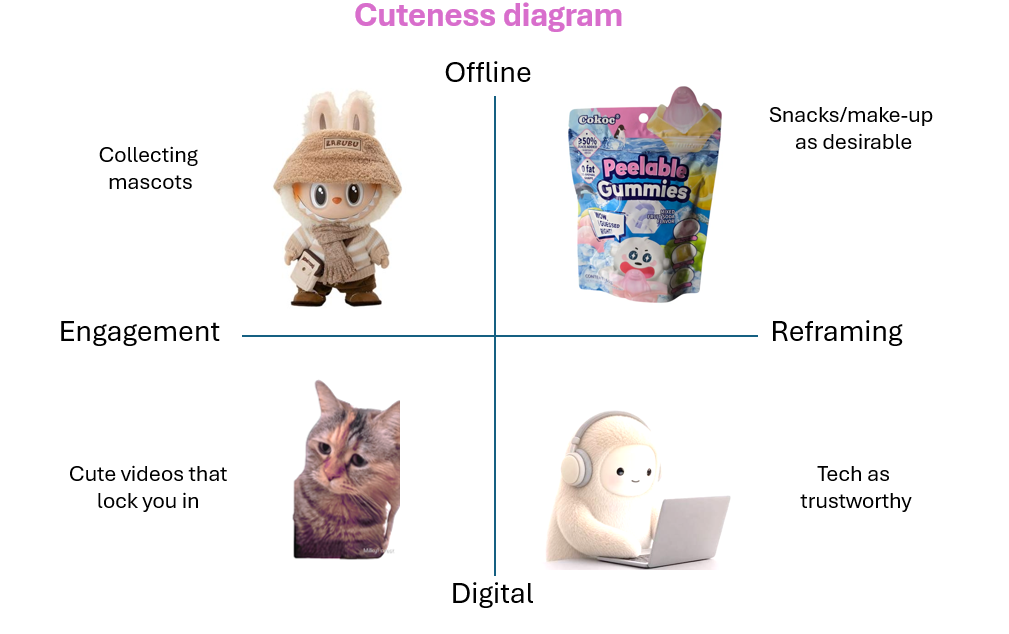
Cuteness is on the rise. Labubu key chains, Disney face masks, Miffy plushies, cute peelable jelly sweets, Pokémon trains – the list goes on. Kawaii has reached global prominence now. Where cute objects were once a niche market in the West, there is now widespread availability of merchandise through chains like Popmart and Miniso. As humans, we are inclined to like cute things (e.g. babies, small animals). Today, this has been amplified as cuteness became a set of aesthetics and markets on its own.
Wide eyes, small mouths, mascot characters, cuteness is everywhere, as I wrote before. This is an aesthetic and life style, as much as an idea that is being sold to us. Cuteness is affective consumption. The cute is innocent and vulnerable. Something that we want to protect, own, and cherish. From the cat videos on the internet to our keychains and figurines, cuteness appeals to our emotions.
I am not surprised that cuteness is on the rise when the chips are down. We cannot control the housing crises, climate anxiety, inflation and heat stress. However we can feel something positive and different by buying a new Hello Kitty keychain. In times of anxiety – both mentally and culturally – cuteness becomes a way to regulate our emotions. Cute is by now affordable, mainstream and visible. It takes us beyond fear, sadness, pain and insecurity.

Types of Cutewashing
Cutewashing, however, takes this a step further. This is a mechanism where cute mascottes or styes are used to frame difficult, problematic or complex practices as innocent or harmless. I will give a few examples of this practice that are maybe not downright evil, but come to mind for me. Here cute characters are aligned with complex industries and ideas, to make us feel happy and good about them.
Consider for instance:
- Paddington Bear used to promote the English monarchy. How do we feel about the queen and Paddington joining forces?
- Pokémon teaming up with the European Space Agency. It’s an interesting collaboration but does it make us think about space exploration in a more critical way?
- Cute packaging of candy. I live in The Netherlands where already years ago brand characters (e.g. Disney) were banned from junk food for children. The idea is that this makes them more likely to pick up bad dietary options.
- Meta’s new AI assistant muse, which looks like a big friendly companion character. Jolly is literally described as an AI Labubu by the designer. A cute mascot in a time when Meta is facing a lot of critique.
In these cases, cuteness is used in relation to (moral) ideas and industry. Should the cute be used to promote the idea of a monarchy, space travel industries, unhealthy foods or addictive platforms?
Social Impact
Cutewashing is used especially corporate industries, but also extends into moral realms like ideologies, politics and nature.
In an article for Prindle Institute, Ken Boyd argues that cutewashing also has a moral and ethical component, for instance in research and biology. Boyd uses the example of the company Colossal, who genetically engineered a cute woolly mouse. This practice raises moral concern. Should we allow these kind of expensive, dubious practices for nature restoration and conservation? Shouldn’t these resources go elsewhere? Boyd concludes that cuteness can blind us for ethics: “The cuteness of the woolly mouse may affect our moral judgments insofar as we see it as something with moral worth that is deserving of protection.” It is intentional, in other words, that they focus in their branding and projects on a cute mouse, rather than a different species.
Cutewashing can also be done for social, green or activist purposes, where its function can have positive impact:
- Greenpeace used artwork inspired by Studio Ghibli in its recent campaigns on the climate crisis. It’s beautiful, sad and evocative, reminiscent of Grave of Fireflies, urging us to take care of nature.
- Battersea using cute imagery to also point out the hidden costs of cuteness in pet breeding
- Cute images on garbage bins have been proven to have a positive effect on garbage sorting
Cuteness has the power for “radical transformation” and positive action, as also concluded by Ingeborg Hasselgren in her thesis on cuteness and activism. In other words, activists can use this type of messaging for their causes, and strive for change.
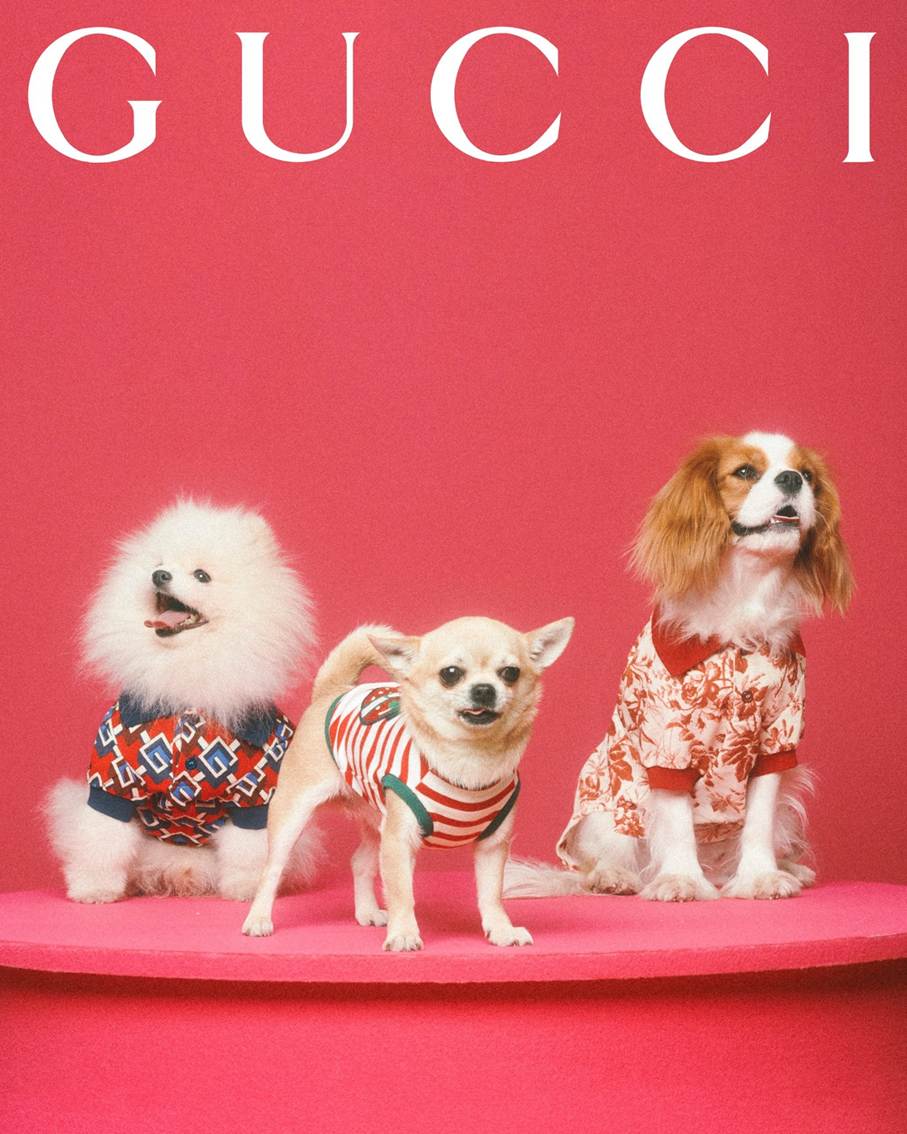
However, the cute is also a spectrum. For some brands and ideas it’s suitable, for others it feels overdone or ill-informed. To an extent, it depends on the consumers and their attachment to a brand how cuteness is perceived or assessed. Do they find it an acceptable use or not? Think of Gucci’s cute pet collection – unnecessary to some, cute and relevant to others.
Cutewashing depends on its intent. Many consumers respond well to cuteness, making it suitable for social causes, but also easy to misuse. Consumers themselves thus need more insight on cuteness. They need to media literacy to understand what cuteness does to us, and to assess where they find this acceptable. This affective response is not something that can be changed, but the aesthetic itself can be critically assessed. Who is approached and for what purpose?
.