
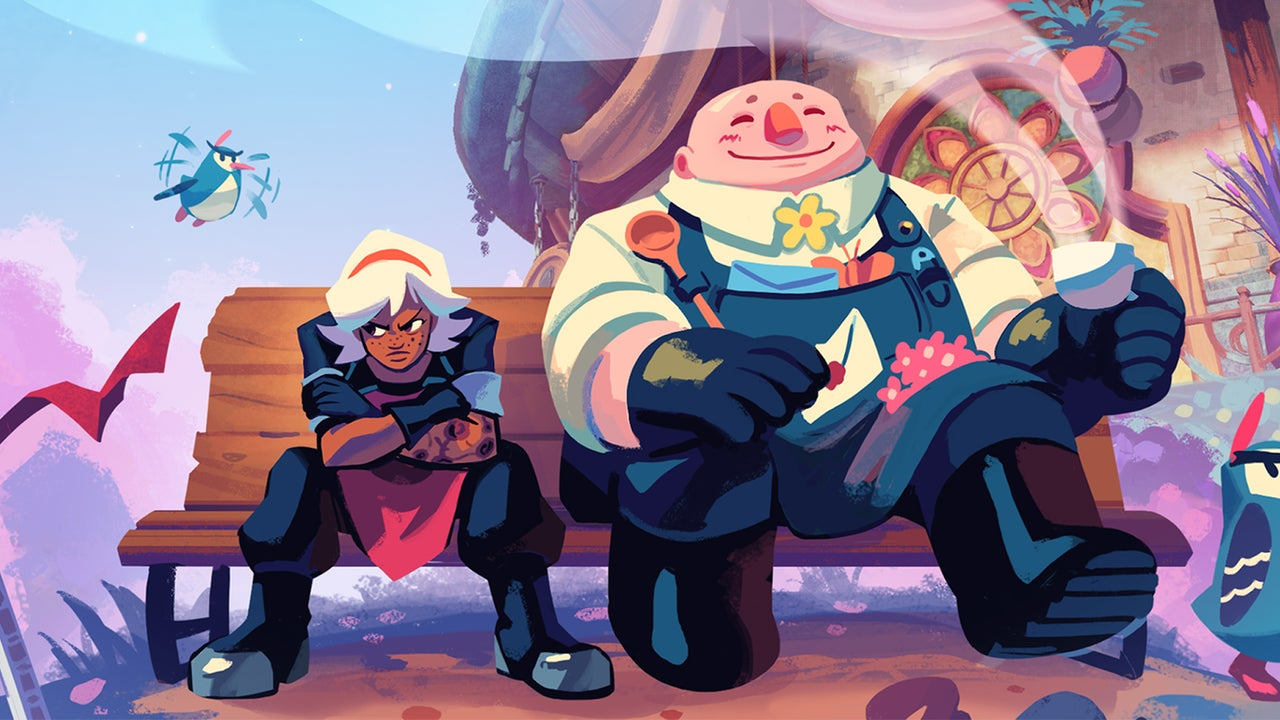
In the cozy game Wanderstop, a former warrior called Alta has find herself again after some difficult losses in combat. Burned out from fighting, she assists the kind owner of a tea shop, Boro. By planting flowers, growing fruits and pouring tea, she gradually regains her spirit and learns to deal with her trauma.
Wanderstop is a magical tea management sim. As Alta, the player can create beautiful gardens and magnificent teas. The game also has a lot to teach us about acceptance, loss and identity. In this deep dive, I discuss how cozy games teach us about emotion and care. I see Wanderstop as a perfect example of this, and of cozy fiction in general. How and why do we find comfort in wholesome stories and games? Let’s think through this question through Wanderstop.
Please note that this article contains spoilers for Wanderstop.
Cozy Fiction and Tea Shops
Cozy games are often used for self-care and emotional regulation. Think of how Animal Crossing: New Horizons and Kind Words helped many players during covid to find relaxation and connection. Wanderstop is a perfect example of how cozy games can help us in self-care and emotional regulation. In fact, that is even at the heart of its storytelling and game play.
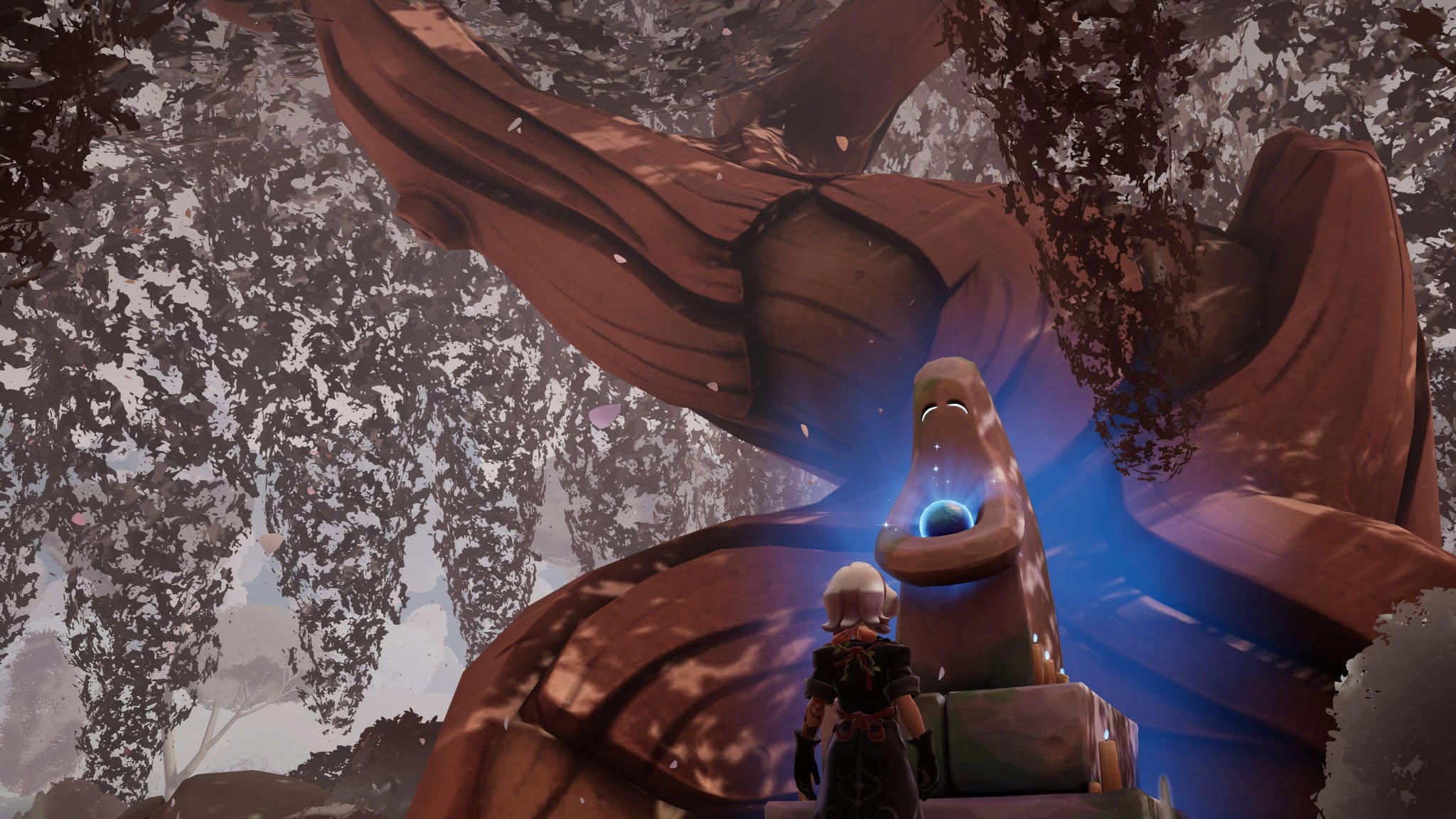
The story of Wanderstop is relatively simple. When the fighter Alta, always on top of her game, starts to loose battles, she finds herself lost. Her whole identity is structured around combat. Hoping to find her strength again, she seeks the help of a legendary fighting master in the forest. However, she finds that she cannot carry her sword anymore and eventually collapses. When she’s awake again, she’s on a bench near a tea shop and meets its owner Boro. He asks her to assist him, and Alta gradually finds meaning in these tasks and in the conversations that she shares with other characters.
Wanderstop is not the only cozy fiction that features a tea or coffee shop as its main setting. This Polish study analyzed 27 cozy games featuring coffee brewing, finding that it strongly adds to the atmosphere of coziness. In cozy fiction, tea shops and coffee shops are frequent settings. They are associated with warmth, comfort and community. A good example is Lattes and Legends, which shares many themes with Wanderstop. In this novel, an orc fighter starts a coffee shop to start a new life, but her past catches up with her. Similarly, the novel Can’t Spell Treason Without Tea features a queer couple that want to start a book shop serving tea, but also run into some perils there.
The choice for tea is a purposeful one. In many cultures, tea has an important role and is a symbol of comfort and connection. Whether we consider the British afternoon tea or Japanese tea ceremonies, tea is related to rituals, culture and community. Carefully brewing tea, drinking it with care, and enjoying it together is a common practice. It is also a sign of hospitality. We see this idea embodied in Wanderstop, where brewing special teas helps characters connect and deal with their problems.
Tea does not appear by magic, but it must be produced. This labor is also part of the game, where Alta has to tend to the clearing. While Alta first experiences gardening as boring and repetitive, she learns to accept it and enjoy it. The same might go for the player themselves, who might find the game play simple at first. The game starts with a relatively small number of plants and items. However, as the game continues, players grow more complicated plants and can create entire botanical structures.
There is an aesthetic pleasure to creating these complex gardens. Players are also rewarded for their special teas. If they drink them, Alta has unique monologues in which she reflects on her past and learns to cope with it.

Trauma and Loss
Wanderstop is at its core a game about burn-out and loss. Alta struggles with burn-out after loosing several fights. She cannot control her body anymore as she looks for the fighting master in the forest. Every time she leaves the tea shop to find herself again and the fighting master who could heal her, she becomes tired. She cannot hold her sword and collapses. Alta does not give up. Different characters push her to again become her old self, but it continuously fails and she always ends up at the tea shop again.
Wanderstop is a painful journey, where Alta has to accept her situation and learn to manage her energy again. However, trauma plays an important role as well. In the major twist of the game, it turns out that Alta did find the legendary sword master. It is revealed that this character did not want to help Alta, but rather wanted her to focus on her healing. Alta, triggered, hurts the fighting master and flees into the forest. Alta has forgotten this event entirely, traumatized, and has distanced herself from it entirely. A part of herself is constantly pushing herself still to be more and more competitive, while she is completely broken.
The primary antagonist in Wanderstop is ourselves. Alta is her own worst enemy, as is clear from the game’s beginning, pushing herself to the extreme. Alta needs to become whole again and accept all sides of herself. This is not easy. The final chapter of the game also introduces a child character similar to Alta, perhaps even a younger version of herself. By befriending this character, Alta slowly starts to heal.
In The Body Keeps the Score, Bessel van der Kolk writes that trauma is a deeply visceral phenomena. We embody it and carry it along through our lives.
“Traumatized people chronically feel unsafe inside their bodies: The past is alive in the form of gnawing interior discomfort. Their bodies are constantly bombarded by visceral warning signs, and, in an attempt to control these processes, they often become expert at ignoring their gut feelings and in numbing awareness of what is played out inside. They learn to hide from their selves.” (p.97)
Dealing with trauma is difficult – a sense of unsafety is embodied and constantly felt, even when there is no real threat. In Wanderstop, Alta is not at home in her body anymore. While she is tired and beaten down, the competitive part of herself keeps pushing her further. She hides her trauma and even forgets about it entirely. The idea of loss is deeply connected to this as well. What happens when we cannot perform our job anymore? When we loose what defines us? When we need to reshape our life after difficult events?
Loss is central theme in Wanderstop, which is also beautifully portrayed in the game play itself. The clearing in which players grow their plants constantly changes. The botanical structures that they build suddenly disappear after key events, which shocked many, including myself. The clearing constantly changes and is added to. While frustrating at first, it is embodies the same struggles and feelings that Alta is going through. After the major twist of the game, this is reflected in the game space. The clearing becomes gray and only grows thorns. However, Alta persists.
In many ways, Wanderstop teaches us acceptance.
Kindness, Self-care and Postponing judgement
How does Alta then learn to deal with trauma and herself? One important way is through her interactions with Boro. Boro is the owner of the tea shop, and the mentor character in the game. He helps Alta with simple tasks, like brewing tea, to relax and slow down. He realizes that she is going through a lot, but he does not judge her for this.
In an interview with Polygon, game designer Davey Wreden emphasizes that he did not want Boro to be a typical mentor character. He wanted to create a round character with meaningful conversations, that are not abstract or vague wisdoms. Wreden emphasizes their dynamics, while also stating: “And we don’t need to call attention to whether or not this is complementing anything in Alta’s character. Just to watch them be in the same space is fun and feels like there’s an exciting tension to it.”
Boro helps create a sense of safety, which is crucial for Alta as a traumatized character. Boro does not judge her either, but acknowledges her situation. I found it very striking to see a mentor character who was not a cliché, and who provided a perspective without too much advice. The interactions with Boro, as a friendly, open character, really worked well for me. One of the most profound moments in the game is when Alta realizes what she did to the fighting master, but Boro does not judge her for it. Rather, he provides her with tea and companionship.
Burn-out is a serious long-term problems that don’t just go away. The game reminds of this. There is no easy fix or way out. When going through these problems, it helps to meet someone who just listens. This companionship can help, but first and foremost we need to learn to be kind to ourselves. Alta isn’t magically healed at the end of the game. Rather, she leaves the forest to slowly get back to a new life. A fitting and realistic ending.
When reaching the end of the game, I often reflected on this marriage of cute cozy games with heavy themes, such as burn-out. After finishing this game, I do think this pairing makes sense. Through cozy games, we can reflect on themes like emotional regulation, well-being and kindness. Those are the exact strategies that we need when dealing with hardship.
It is no wonder then that cozy fiction is at its peak then. We struggle with a climate crisis, geopolitical conflicts and a turn to automation. We are insecure, tired, and find our work life changing every day. Sometimes it feels like we don’t have much agency at all.
Cozy fiction offers an escape to these everyday troubles. We are transported somewhere magical and different. However, as Wanderstop shows, cozy games can stress the importance of love, self-care and connection.
Tea is a cultural symbol of this comfort and warmth.

Read more game theories here:
Dear Esther | The Last Guardian | Deltarune | Night in the Woods | Oxenfree | Abzu | To The Moon | Contrast | Thomas was Alone | Final Fantasy VII R | Final Fantasy VIII | Death Stranding | Stanley Parable | GRIS | The Witness | Monkey Island | Sea of Stars
 Nicolle Lamerichs