
Difficult games, such as Dark Souls, Elden Ring, or Silksong, do not always have a good reputation. For a long time, I dared not touch these games myself. They simply seemed to challenging. By the time that I had finished Dark Souls last year, I had turned around completely. These games actually test your patience, require deep focus and require you to learn. I was surprised how rewarding it was to beat them.
However, difficult games draw a specific crowd. While some may help other players master a boss, others police each other’s play practices. Think of comments like “skill issues”, “git gud”, and critical remarks about using NPC’s er tools. These discussion reflect a culture where skill becomes a badge of honor. This gatekeeping doesn’t only apply to gameplay – it also shapes how fans judge each other’s creative works, such as fan art or fanfiction.
These dynamics raise broader questions. How do we talk about difficulty in a nuanced way? How do we make space for different experiences, especially for players who may already feel judged or scrutinized, such as queer or female players? How do we allow for difficult play practices and joys in our discussions?
For this purpose I made a small typology of game fandom that I’d love to share. I think it helps in talking in a more nuanced way about the different ways players might interact with a game.
Silksong Fandom
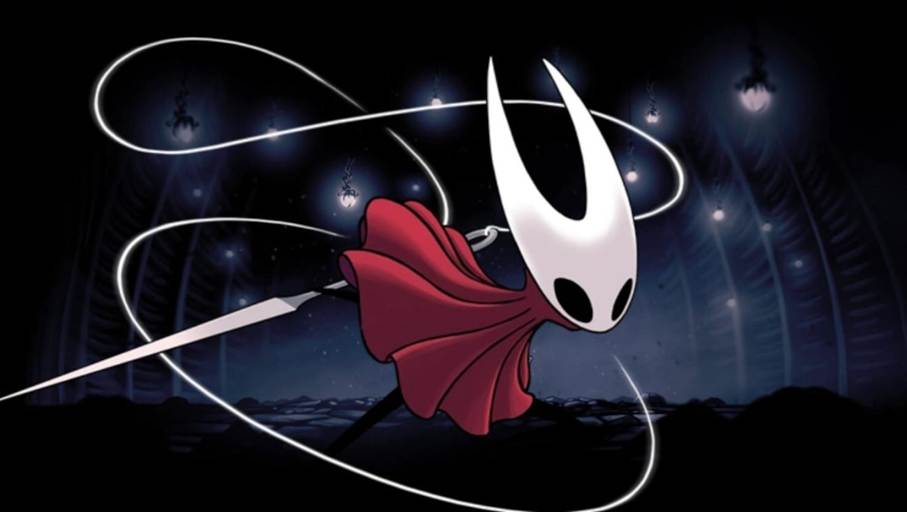
As an example, I’d love to touch upon Silksong, a game which I’ve been playing the past months. This sequel to Hollow Knight offers a beautiful platform experience in a grim world filled with bugs. After being trapped, the main character, Hornet, ends up in the unfamiliar land of Pharloom. There she stumbles upon many different bugs, while acquiring different tools and visiting different areas as she progresses. Silksong has outstanding music, great atmosphere and a dose of cuteness. Still, it’s fan community is also associated with toxicity, as these headers from different press outlets and Reddit discussions show:
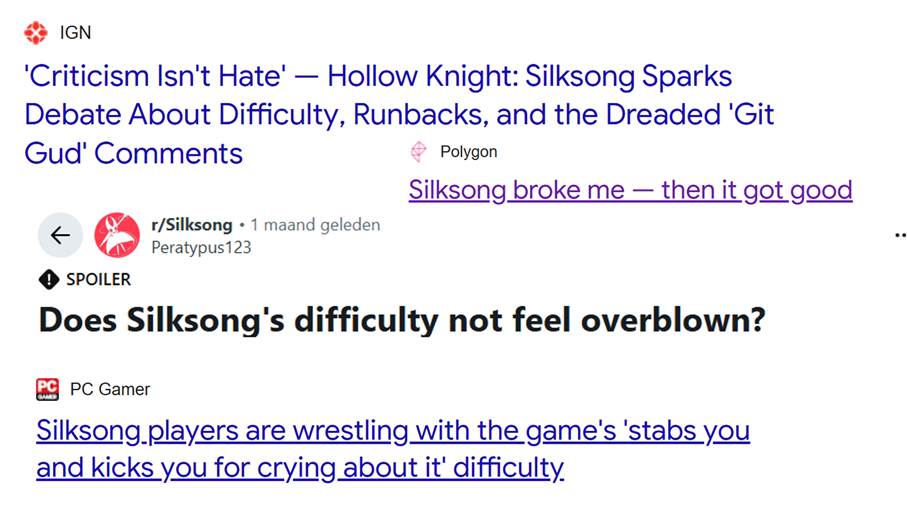
Silksong fandom is not always a great place to be, and that perhaps is tied to the game’s difficulty. Some players treat mastery of the game as proof of belonging. Some judge those that play differently harshly (e.g. by using mods, tools or NPC’s). This is a form of gatekeeping that controls who is included or excluded in game spaces. While gatekeeping in fandom is often associated with identity politics, difficult games actually connect it to skills very often. So it’s still personal, but in a slightly different way than, say, the fake geek girl controversies, gamergate or other phenomena in toxic fandom.
However, I also want to draw attention to the fact that this is only one type of player within the community, and there’s many other fans that enjoy Silksong in other ways. They get different creative, social and psychological benefits from the game, and these fans are not always as visible as the “toxic fans” in the discourse around Silksong. When I got into Souls-fandom and metroidvania, I actually found many inclusive fan communities where members help each other out, support each other and share different creations.
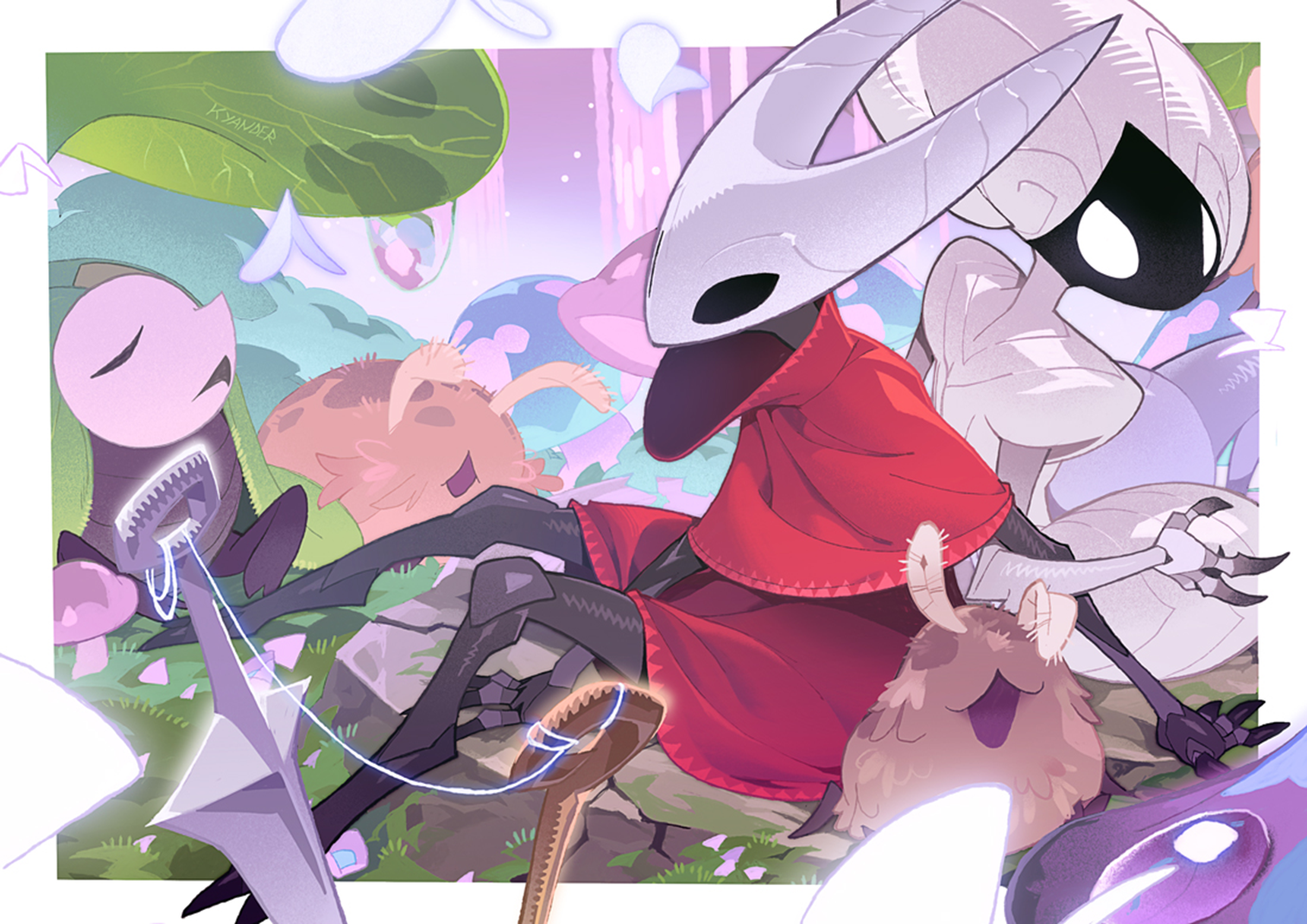
Think for instance about queer fans, who are very enthusiastic about Silksong. The different bugs and their diversity (we can easily project diverse genders and sexualities on them) make for fantastic material for us. Especially on Tumblr, lesbian fan art (also known as “bug yuri) flourishes. I personally am a “Lacenet” shipper, who’s totally into the Hornet/Lace pairing! The game itself encourages queer readings. Some of the boss fights are very queer-coded and intertextual:
- Lace and Hornet fight among rose petals high in the sky, similar to Shoujo Kakumei Utena’s iconic duels.
- Cogwork core’s boss battle, where two male beetles dance and one griefs when his partner is defeated.
Another example is “Silkposting”, which is very different but equally creative hobby. Before Silksong was released, these fans posted fake news and memes about the release on Reddit and elsewhere. To those in the know, these posts (“skong”, “milksong”) made sense and build on each other. It’s a funny way of shitposting with a lot of deep cuts! To casual fans, these posts were a bit weird or misleading. Silkposting combines shitposting, theories and references with play, comedy and creativity. It’s a form of memetic play, again very different from the gatekeeping mentioned above.
An important note: Today you do not even have to finish a difficult game to enjoy its world, story, and characters. You can enjoy it through many media. You can stream the game play. You can watch other’s play. You can enjoy the fan art. Within the space of difficult game fandom, there are also fans like this.
Typology of Game Fandom
Since game fans in this space have very different drives, I felt the need to visualize this further. I was inspired by Bartle’s typology of players, but with twists, since he based his work a lot on multiplayer games and didn’t look at the spaces and communities around a game.
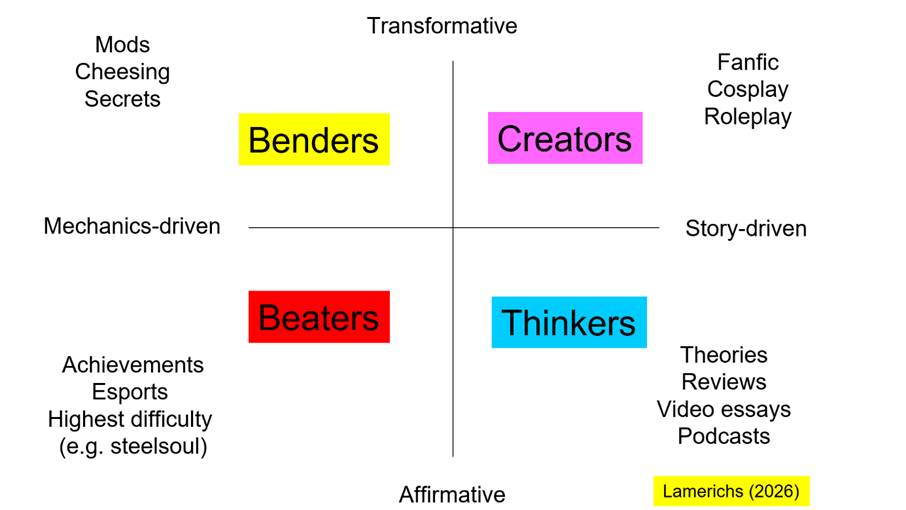
The axes represent the different interests of fans:
- Some fans think about a story in transformative ways, building on it and creating new elements out of it. They keep adding to it. Others are affirmative / affirmational. They stay close to the canon, play a game as is, and care about what authors say about the meaning / lore of a universe. For more on this divide, click here.
- On the other scale, you see how fans can be story-driven, invested in the narrative, world and characters. On the other side of the scale, they can be driven by mechanics, rules, and the play itself.
You see the different types of fans associated with these interests:
- Creatives, who make new material based on the source text, such as fan fiction and fan art. Role-playing, cosplay, videos, they use different media to add to their favs.
- Benders, who love tweaking the game, bending its rules, unearthing its secrets, adding mods to it or other things. They don’t always play by the book, and they love it.
- Thinkers, who think about a game and its lore very critically. They may also use their knowledge on a meta-level, like the Silkposters who provide memes, deep cuts and fake news in ironic ways.
- Beaters, who love completing the game, often on highest difficulty with all the rewards and achievements.
Important is that these drives and interests don’t rule each other out! You can be all these types as one person; you can also see them as practices or modes, Within Silksong fandom, I’ve been in all these boxes at some point. This changes depending on what you are doing, how deep you get into the community, and what your interest at the time is. Sometimes you just want to really defeat that boss, other times you just want to enjoy making some cozy Lacenet fan art!
Diverse Fan Cultures, Spaces and Experiences
Online platforms shape these experiences and sometimes cater to specific game types. Reddit is fantastic for discussion and shitposting. Tumblr is still a vibrant space for fan art. YouTube leads to us observing each other’s game play – for better or worse. Where one can find lots of debates on Reddit “proper” ways to play Silksong, Tumblr or Bluesky tend to foster warmer, more creative communities – full of shipping, queerness, and even romantic bug fan art.
There are countless ways to enjoy a game. You can play critically, emotionally, theoretically, competitively, casually, or just for the vibes. And your style can change from moment to moment. One day you find yourself haunting down achievements, another you might explore secrets or lore. Games can played and loved in different ways – this insight helps us understand why gaming communities can feel both deeply supportive and deeply divided.
These differences remind us that there is no single Silksong fandom and no single type of fan. There’s a multitude of types, spaces, practices and connections out there. We need to really learn to understand, and embrace, this diversity of play. Hopefully this model can help you get started.
The abovementioned model is a work in progress. Interested in featuring it in your journal? Then drop me a line!
 Nicolle Lamerichs