
2024 was undoubtedly the year of fans. Large companies have taken note of these groups, and appeal to them with large transmedia franchises as well as a thriving merchandise and event culture. Transmedia is at an all-time peak as origin stories, sequels and prequels dominate the box office. Furthermore, AI is now a staple in our media culture, but some unexpected business models marked the development of this technology.
The Year of Fans
2024 marked a key turning point in fan cultures and how they are received in the mainstream. By now there is common knowledge about fans and how important they are to brands. There is also an increased appreciation of the rich parasocial relationships are that fans build with celebrities, influencers and even fictional characters.
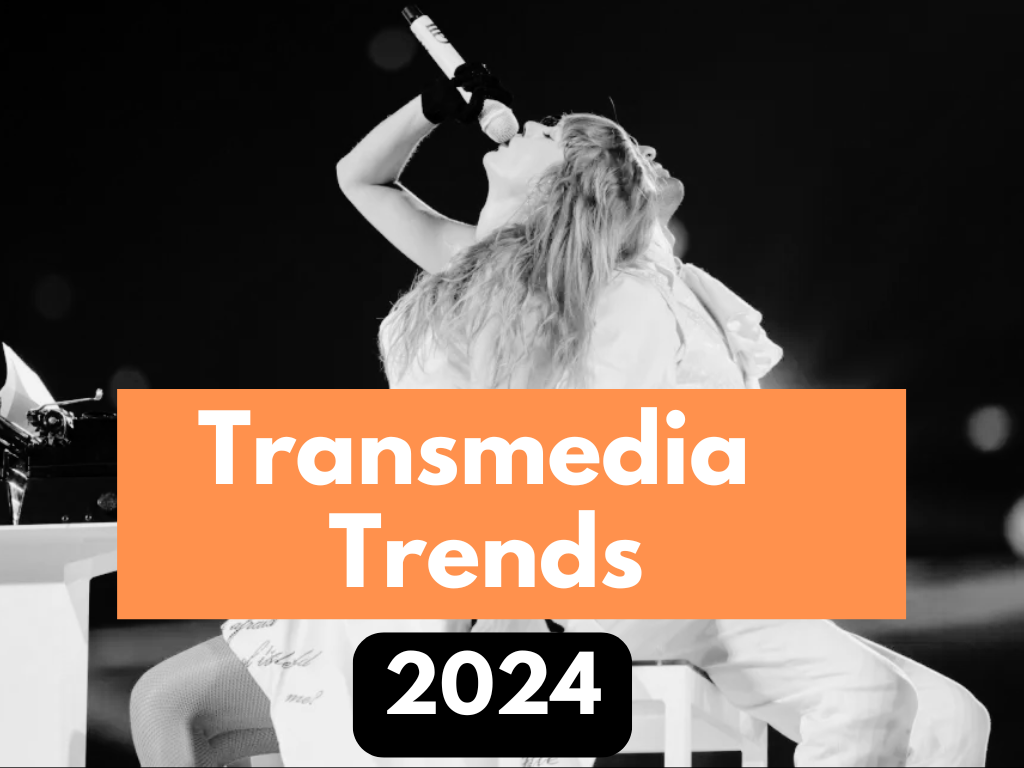
The global Eras tour by Taylor Swift is a fantastic example, an extravagant fan experience that grossed 2 billion dollars. Fans engaged with the community deeply, leading to inspiration, social support and new friendships, often marked with friendship bracelets. The emotional honestly of Swift and her deeply moving lyrics inspired many, who showed up en masse for The Eras Tour, often in appropriate attire.
The exclusive fan experience for Wicked premiere at Universal Pictures is another example, tying in physical, immersive spaces with a fictional story world. I personally attended premieres of many streaming shows, such as Acolyte and House of Dragon, at my local cinema. That’s quite something for The Netherlands!
There is a common understanding that fans are an important consumer segment of any product, and that exclusive experiences can be created just for them. Fans, however, can also be very vocal, because they invest a lot in these stories and celebrities. As a result, they feel a large sense of emotional ownership over them. The creative industries increasingly checks in with the fanbase, also to minimize potential toxic responses. Some Hollywood studios, for instance, now also test their products through “superfan focus groups”. Co-creation and research are embraced to get more insights on these groups.

A Thriving Fan Economy
The material culture of fans is changing as well. There has been an increased interest in cosplay the past years, but by now fans also dress up for other occasions and in more subtle ways. Think of how fans were encouraged to dress up in style of Swift’ albums during The Eras Tour, or wear green for the Wicked movie premiere.
Brands are producing diverse clothing lines inspired by iconic stories and celebrities. This is not just a matter of fast fashion, such as Primark producing licensed Disney shirts. Couture is on the rise as well. The Her Universe fashion show at San Diego Comic Con is a great example of this trend, where designers show outfits inspired by popular culture. Some cross-overs of this year include a collection inspired by Death Stranding by the label Acronym. This $1700 jacket was almost instantly sold out. Read more about this type of “sartorial fandom” in this edited collection.
Luxury brands have discovered the fan market and are actively tapping into it. Other businesses have taken note of these opportunities as well. Extensive LEGO sets for adult fans, beautifully designed premium merchandise, VIP tickets and locally produced 3D-prints – fans have disposable income and companies cater to that.
The fan economy is also thriving bottom-up. Walk around in any artist alley at a convention to see the creations by fans, often of high quality and increasingly paired with sustainable resources. With different printing and production techniques becoming more accessible, consumers also contribute to this material culture with their own designs.
Streaming Wars and Franchising
Different streaming platforms have immersed the past years, and this year consumers have had to make some tough choices. Which platforms do they keep, and when do they let go? As this landscape has become more fragmented, streaming services have increasingly integrated new business models. Paid streaming is for instance is increasingly paired with advertisement-based video-on-demand (AVOD). Platforms such as HBO Max and Sky Showtime integrate advertisements, even in paid subscriptions to boost their revenue.
The streaming wars are a fact and broadband is still popular. However, we also see that younger generations turn to social media more than broadcasting or paid streaming. TikTok, YouTube, Twitch, that’s where you’ll find Gen Z. Their interest in authentic content, influencers and short media increases, creating a distinct youth culture that sometimes radically differs from other media.
This year we saw those cultures blend, for instance in the trending TikTok genre “marketing scripts written by Gen Z”. These videos are purposefully scripted in youth culture slang (Slay! Main character energy!) to present zoos, museums, libraries and brands. That the videos are often presented by boomers adds to the joke.
AI and Content Adaptation
Generative AI and the metaverse are a given now. Tools such as ChatGPT have quickly found their way into the routines of professionals, creatives and students. They are also met with criticism, and many wonder about the responsible use of these tools, and whether this is the final form that they’ll take. (For more general insights on AI, read the previous Transmedia 2023 Trend Report here.)
A lot of companies now invest in “content adaptation”. In such models, content is transformed or adapted to a new medium, but retains its core elements and messaging. Content adaptation makes it easier for audiences to engage with your content in a new form, sped up by AI. For instance, a slidedeck or blog is turned into a video, or a video is turned into a set of images quickly. Another example is Speechify, where an AI generated voice reads text out loud for you. Content adaptation makes it easier and faster to engage with content in new ways. It does not produce a new work based in random data sets, but makes content more accessible to new groups.
Content adaptation can lead to new media practices. AI in education for instance now has a problematic position, mostly sparked by ChatGPT. However, there are countless of other more productive examples that contribute to education. A great example is NotebookLM, which turns academic papers into podcasts that help students in their learning journey.
AI is here undoubtedly here to stay. It requires good regulation, but also an awareness of the many tools out there, and what they could add to our practices. This always has to go paired with human creativity and critical thinking, of course, which cannot simply be outsourced to technology.

Other trends
Many other trends marked the media culture of 2025, such as
- Increased franchising, as marked by Mufasa, Wicked, Moana 2 and many other productions.
- Offline influencers, that try to reach their direct environment through their activism and enthusiasm. These are often used in community projects to create positive experiences for Gen Z. Read more here
- Metaverse festivities, such as a digital celebration of Christmas or New Year’s Eve on virtual worlds
My hope is that 2025 pairs this increased wealth of technologies and content with a more responsible use of platforms and data. More attention to sustainability is also inevitable in media consumption and production, since many of these tools and events have a heavy carbon footprint. Will next year open the doors to a more eco-friendly and participatory media culture? Let’s find out!
 Nicolle Lamerichs