
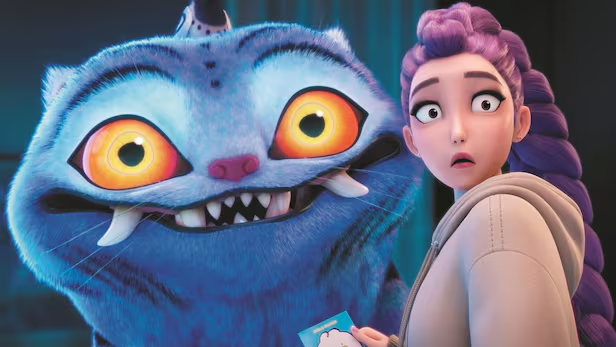
The past months, Kpop Demon Hunters has been a massive success on Netflix. This animation film about a girl band fighting demons became a worldwide phenomenon and its sing-along version even aired exclusively in cinemas. Its hit songs, like Soda Pop and Golden, led to many viral dance videos. Rumi, Jinu and the other characters (yes, you too, Derpy Tiger!), have inspired fan art, fan fiction and so much more.
Kpop Demon Hunters deserves the praise, I won’t argue that, but I wanted to zoom into something that stood out to me – its depiction of fandom. As a fan studies scholar, I found this portrayal of fans very relevant in a time where fandom is still often stereotyped. K-pop fandom specifically is often associated with overly passionate fans (“stans”) who are emotionally over-invested. What does the film say about K-pop fandom and being an idol?
Fandom and the Collective Power of Emotion
What stood out to me immediately is that depicts fandom in a diverse and energetic way. The fans of Huntrix and the Saja Boys include not just teenage girls, but many types of people, including older men and women. K-pop is a genre for all to enjoy, dance to. first see them as they are at a concert, raising their glow sticks, dancing to the music.
Emotions are an important part of K-pop fandom, and the film doesn’t shy away from this. We see sparkly eyed men, girls waving with Huntrix glow sticks and elderly women scouting for autographs. All the fans are depicted as energetic and passionate. The film even has its own visual language for this, such as the girls having thirsty popcorn eyes that literally pop and melt when seeing hot idols.
KPop Demon Hunters positions fandom squarely in the history of music, for instance by referring to a legacy of Hunters that have fought demons and entertained crowds for centuries. “Our music ignites the soul and brings people together. With this connection, the first hunters created a shield to protect our world, the Honmoon.”
It’s easy to draw parallels between KPop Demon Hunters and Turning Red, the lovable Disney-Pixar film featuring an Asian teen girl (Mei) transforming into a Red Panda. The collective power of fans and artists is the climax of this Pixar film as well. The chanting of the fans, protagonists and their beloved band 4*Town sends Mei and her mother to the astral plane to connect with their panda and their family history. The astral plane acts similar as the “honmoon” (a spirit gate) in KPop Demon Hunters, which also is created through music and the collective power of the audience.
In these animated films, fandom is connected to rituality and culture in a meaningful way. Their energies summon ancient forces, allowing artists and fans connect on a deeply spiritual level.
Celebrity Burn-out
Today’s fandom has a lot to offer, but is also characterized by overinvestment and a complex industry that produces these artists and caters to fan behavior. Kpop Demon Hunters zooms into the parasocial relationships that fans have with celebrities, and the enormous pressure put on K-pop celebrities to keep producing.
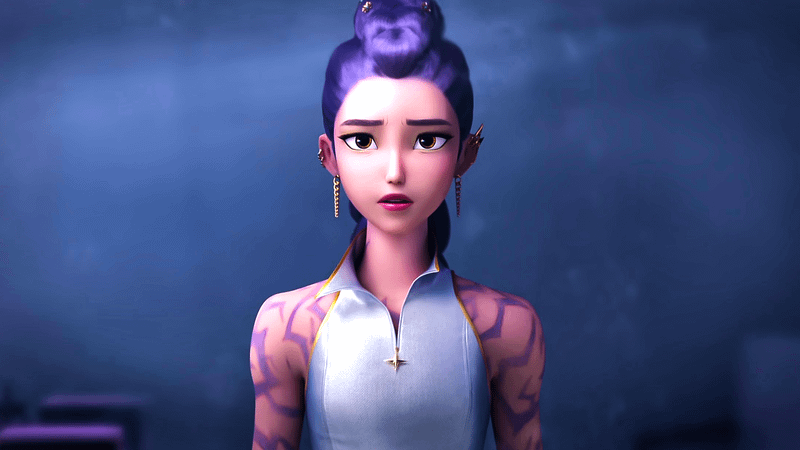
For example, Rumi is the emotional anchor of this film, but she is burden by her secret (spoiler, she’s a demon) and is clearly overworked. She is tired, breaks her voice during rehearsals and struggles. Nowhere does she truly relax and work is just seen as something that she has to persist in. It is indeed a pity that the film doesn’t address this problem more.
As Sam Jennings writes in The New Statesman, the film addresses important themes of celebrity and fandom, but does not critique the industry in a meaningful way: ‘The film’s popstars are portrayed as overworked and exhausted. They use every available break to pile up junk food, are forced to disguise themselves in public and desperately look forward to long days rotting on their skyscraper penthouse couch. In the film, this is all very cheery and goofy, clearly designed to be relatable to stressed-out young women the world over.’
What this critique ignores, however, is that Rumi’s burn-out and secret identity relate and are ultimately the climax of the film. Her anxiety has to be resolved, and the film goes through great lengths to show her coming to terms with herself. Kpop Demon Hunters has been compared to Frozen on multiple levels, amongst others for key theme of being yourself and embracing your magic/what makes you different. In both movies, the protagonists also fear for a public witch hunt or reprimand of who they are. Since Rumi is a celebrity, she worries about being unmasked by her fans and being unfollowed. This is represented well in the song Takedown: “I see your real face, and it’s ugly as sin.”
Toxic Fandom and “Your Idol”
The dark side of fandom is also addressed in the film perfectly, especially in the song Your Idol. While Takedown reflects on idols falling from their pedestal, and potentially get cancelled, Your Idol speaks of how bands draw in fans emotionally.
Your Idol is literally a song about toxic fandom. The Saja Boys sing it, which is very on point because they are the villains of the film, a literal demon-band. They have been manufactured to manipulate people, and their songs reflect this. Your Idol represents obsession and how artists benefit from fans. It contains lyrics such as:
Keeping you in check (uh), keeping you obsessed (uh)
Play me on repeat 끝없이 in your head
Anytime it hurts (uh), play another verse (uh)
I can be your sanctuary
Your obsession feeds our connection
이 순간, give me all your attention
Fans keep artists going, provide emotional and digital capital. They feed the attention economy which the idols are a part of. Being a fan of idols is portrayed as an immersive, religious devotion as well, where idols are “preaching” and fans are praying. As they sing: “You’re down on your knees, I’ma be your idol”. Fandom is paired with religiosity, zeal and over-obsession. Your Idol is a warning that we can take it too far.
What’s Next?
Kpop Demon Hunters is a nuanced portrayal of fandom. It’s depicted as intergenerational, a force for good but also a difficult obsession when fans take it too far. At the end of the film, the Saja Boys also weaponize fans against their idols. A powerful moment is when a male fan looks at his glowstick, now a dark weapon, and realizes that he couldn’t keep Huntrix together. The band means the world to him, and his beloved merchandise now becomes a force for evil. Luckily, it all turns out well at the end, also for this fan.
I hope that more media will be released that depict fandom in this nuanced way, and as part of our daily lives. Kpop Demon Hunters tries to normalize fandom to a degree, and will seem relatable and funny to most fans. I think this a movie that many can enjoy, even if they don’t know K-pop that well, through it’s universal depictions of music, celebrity and the power of the audience. If you have the time, do give it a go. And if you already saw it, I hope this gives you some fresh perspectives.
 Nicolle Lamerichs