
Vibe coding, you might have heard of it. It’s a new buzzword in tech. The discourse around the word is largely positive, pushed by AI enthusiasts. Former OpenAI researcher Andrej Karpathy referred to it on X to describe how AI allows users to “give in to the vibes, embrace exponentials and forget that the code even exists.” Vibe coding is about flow, styles, and infinite remix – pushed by AI.
Vibe coding captures the problems with our current digital culture and artistic landscape well, I think. Vibes can be reproduced – they are impressions, more of the same. Oxford Dictionary defines a vibe as “a mood or an atmosphere produced by a particular person, thing or place”. Vibes can be great if you are looking for something familiar, bad if you are looking for innovation. In a previous post, I already wrote about some problems of media content in the age of vibes.
Vibes, however, are adopted more and more in tech language and journalistic discourse. They are not seen as a bad thing (see video below), but rather as something that is intuitive, saves us time, and is very simple. It’s associated with AI, which augments and repeats certain patterns, genres and styles. However, what if vibe coding wasn’t just a quality of AI? What if all of us, steadily, were vibe coding increasingly in our art and content?
Vibes and Computational Thinking
As Cathy O’Neil writes in Weapons of Math Destruction, algorithms remix human knowledge and patterns:
“There is no such thing as a new idea. It is impossible. We simply take a lot of old ideas and put them into a sort of mental kaleidoscope. We give them a turn and they make new and curious combinations. We keep on turning and making new combinations indefinitely; but they are the same old pieces of colored glass that have been in use through all the ages.”
– Cathy O’Neil, Weapons of Math Destruction
Machines like generative AI remix human knowledge, but it’s important to realize that humans also start thinking more machine-like. When a new technology is adopted, it changes our practices and ways of thinking. When computers were invented, we engaged in computational thinking and learned to organize our information in different ways. Creating data, and organizing it systematically. While we first thought of computers as an extension of the office and tables (the “desktop”), they soon become extension of our culture and reality.
By now, algorithmic thinking is the norm, which is reflected on how we think, create and learn. For example, today, a human artist might adapt their content to suit the needs of a specific platform. That artist might consider popular genres, hashtags and taxonomies to make their work stand out.
We choose forms of content that fit the current trends and styles. In other words, human creators are vibe-coding.
The Problem with Vibe Coding
Vibe-coding leads to a wealth of similar content. I am not surprised that we currently see a lot of discourse today on what is or is not AI art. The lines are blurry, and as the machine reproduces known human styles, humans also enact these genres. Welcome to the economy of vibes!
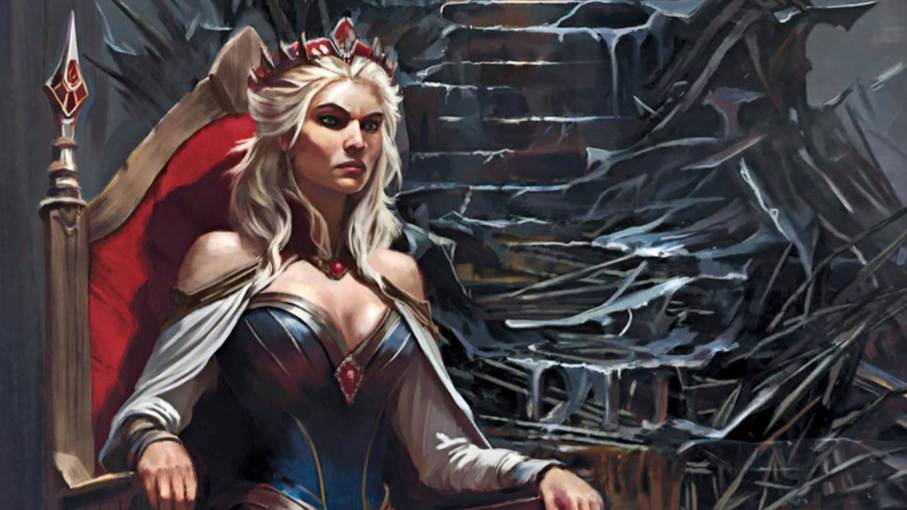
For example, recently the publisher of A Song of Ice and Fire was accused of using AI to create the illustrated version of A Feast of Crows, even though author George R.R. Martin takes a firm stand against generative AI. On Martin’s blog, a spokesperson comments on the controversy:
‘To our knowledge and as presented by the artist who completed the work in question there was NO such programing used. While he is a digital multimedia artist and relies on digital programing to complete his work, he has expressed unequivocally that no AI was used, and we believe him.’
Fans were not reassured though. The illustrated edition features inconsistent art and character designs, odd-looking limbs and Christian symbols (a religion which of course does not exist in Westeros). If it is man-made art, the author did not understand the story world at all. You can read more in this article by The Gamer for instance.
We are increasingly critical of art, as we should be. In an age of tropes and vibes, it becomes difficult to distinguish between machine-made and human-made.
Algorithmic Thinking and Innovation
There’s a big problem with vibe coding and AI then, namely that we start to think more like a machine. This thinking will not subsist, but rather increase as we learn to live with these technologies.
In a post by University of Pretoria, new skills are contributed and assessed in relation to AI. To truly understand this difficult landscape, we need to teach AI literacy, algorithmic thinking and data literacy. It is now wonder that a lot of education and work now focuses on: How was AI content generated and prompted? Where are the flaws, bias and misinformation? What can be done to optimize it? How can it be used to add to human skills? Working with AI is, luckily, taking on a more critical shape and form.
Hopefully a rise of critical skills will help us discern between different types of AI art. But there are more problems here. Even if we do not vibe code with AI, but vibe code in a broad sense, we create problems. For example:
- Users do not actively innovate our art and content
- Users contribute to specific hashtags and taxonomies, pushing specific content
- Users create and upload on to big tech platforms, contributing to their profit
It’s all quite difficult and deeply related to platformization. Platforms become gate-keepers and AI augments these biases further.
I do not mean to say that vibes are a bad thing per se, but vibe coding feels problematic, even in its broadest sense. It actively pushes and promotes these tropes and biases. It gives into AI easily, in a time when we should be weary and reflexive. Now that vibes dominate our culture, we need to think of new ways of being, doing and creating. That’s not easy.
You might wonder, how can I resist vibe coding? I challenge you to step outside of the comfort zone. Actively look for new types of content, small accounts and home-made art. Can you identify or create something unique, different and out of the ordinary? Think about what you can do. Innovate your own practices. Resist AI use. Support local artists, independent creators and small initiatives. By doing this, you can already make a difference.
 Nicolle Lamerichs