
Researching media has gotten more complex today. One important reason is that online cultures have radically changed the past years, partly due to the rise of algorithmic media and generative AI. Where we used to believe the internet would empower citizens, we now know it’s also a cause of polarization and division. These developments are intensified by generative AI, which can push fake news and biases further, and also makes us question what media is and who creates it.
How can we study media today? I’d love to share some tips and advice based on recent studies and experiences.
Media Culture in Transition
In the 2000s, media scholars were largely positive about the internet and online platforms as tools of empowerment. They emphasized the participatory and playful potential of the internet, through concepts like citizen journalism, participatory culture and gamification. However, in today’s data-driven culture, these developments do not fully uphold anymore.
What do we see today? A landscape where user cultures are divided; content is pushed by big influencers, companies and AI; media are not sovereign, but sites of power and specific discourses. Large gatekeepers in these spaces are the oligarchies of big tech companies, such as Google, Meta and Amazon, whose business practices, services and power has exponentially grown the past years.
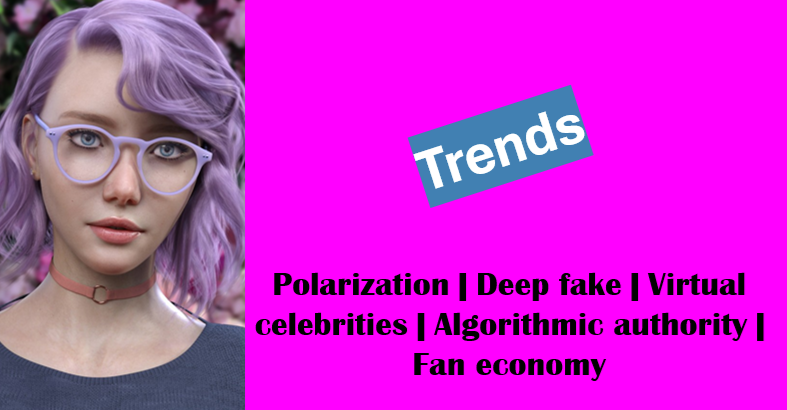
Overall, large developments require that we think through media studies again, and what the purpose of this discipline is. To summarize, we must critically re-assess our models due to the rise of generative AI, algorithmic power and authority, a complex platform economy and user cultures divided by polarization.
About Media Studies
Media studies is a broad field which developed from the humanities, social sciences and business studies throughout the years. While it focused on mass media in the beginning, it shifted towards the internet and democracy in the 2000s. Now, we see a transition towards the assessment of online culture, data and capital.
It’s important to note that media studies is by no means a unified discipline. It consists of many different areas and fields, such as media theory, platform studies, game studies and fan studies. Some colleagues who engage in these sub-fields only find themselves adjacent to media studies, or might not relate to it altogether. In terms of approaches, different types of analysis are possible as well, such as the analysis of:
- Media texts and expressions (e.g. critical discourse theory, narrative analysis)
- Media and communication (e.g. framing theory, content analysis)
- Media history (e.g. archives, historical approaches)
- The media industry itself (e.g. close-reading of policies)
- Technologies and materialities behind media (e.g. material analysis)
- Data and algorithms (e.g. data analysis and visualization)
That’s just a super simple short overview, and I’m sure that I might forget some approaches or sub-disciplines. Point be, this discipline is diverse and will always stay diverse. I do not even account for different regional differences here, since across the globe there’s different approaches, entry points and theories as well.
Creating a discipline is a matter of boundary work, and it stays a bit slippery to say what is or is not part of this field. For a long time, we did not even capture this field as media studies. There were no bachelors or masters for media studies. It’s only a recent phenomenon that we provided this label, and some might still train in film studies, theater studies, game studies or other disciplines.
Updating Media Studies
The approaches mentioned above are all still valid and relevant. However, I also see students and colleagues struggling to identify where their scholarship fits, and how it can be updated in light of the media transition that we are in. That’s where I’d love to offer some advice!
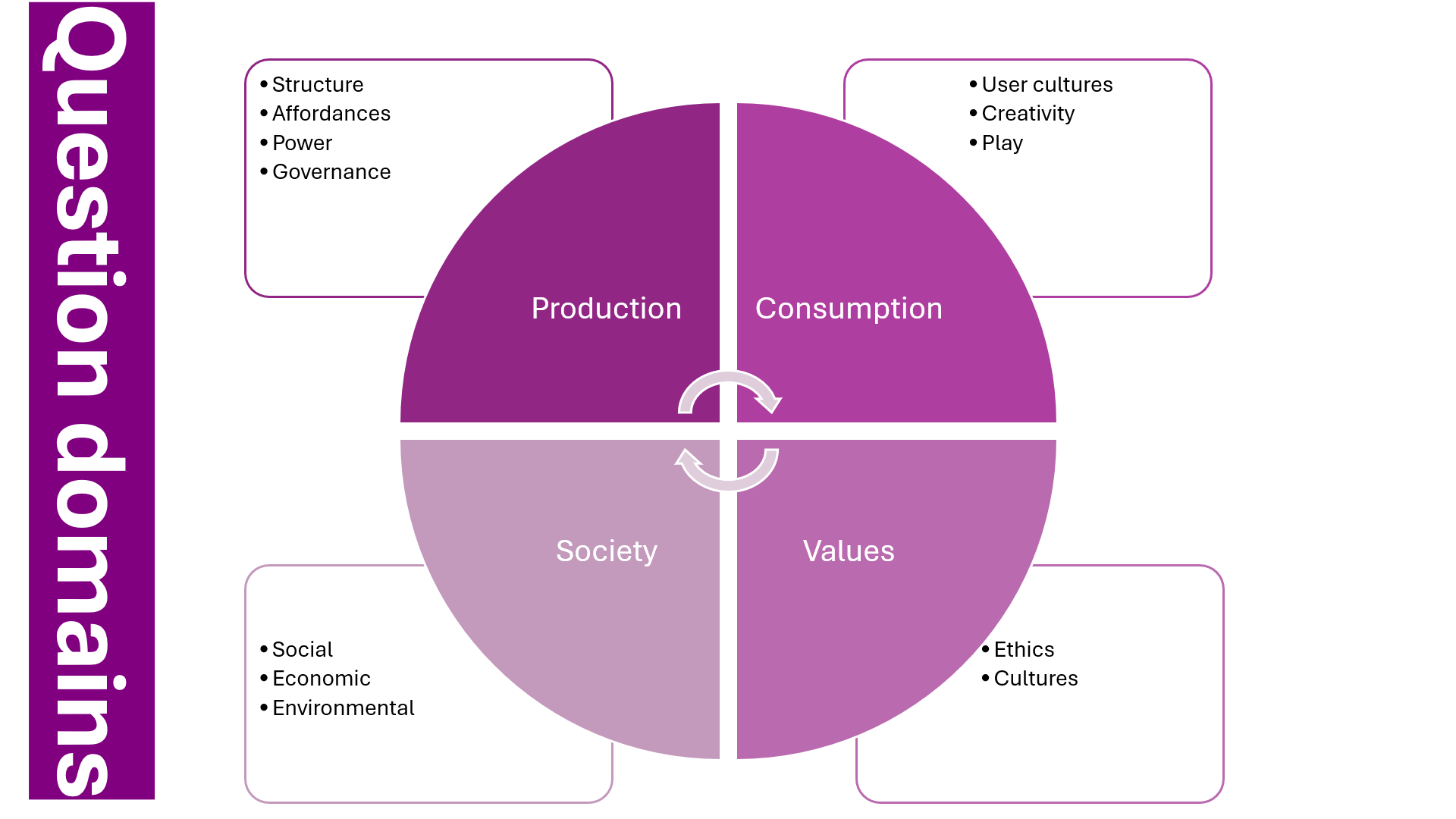
In my experience, it helps to paint a picture of the landscape and practices that you want to examine. Be critical, map this out. You can question for instance:
    Structure: How are media structured? Think of affordances. In other words, what is possible and impossible through their designs and what are the loopholes? How is it governed? What options does this provide for citizens, but also where do we see lobbyists or others intervene?
    Power: Where is the power? How is this given shape in terms of surveillance and business practices? How is this established and intensified, for instance by Big Tech or AI?
    Culture: How are media used by people in their everyday life? What are their experiences and how do they embed them in their own subcultures?
    Creativity: What is it that people design and create in terms of media in this creator economy? How do they frame it and what does that say about our culture?
    Play: How do users overcome challenges and restrictions that media set to their users and audiences? Where do they play, resist and subvert practices and norms?
    Sustainability: What is the material and natural cost of the media consumption or production that you examine? How do these practices, data centers and hardware influence our environment? Is there a true price that we can assign to these practices?
    Values: What does this say about our innovations and global culture? What are the ethics behind these user cultures and technologies, and their potential biases?
Once you ask yourself critically what practices you investigate, and what possibilities and challenges there are, you can start to define your analysis in more detail. Define exemplary cases, methods and theories that help you reach the goal. What questions are most important or provocative? Which sub-fields are most essential to study? Which method can help you unearth these insights?
Tips and Tricks
The current media landscape is highly complex to study. Here’s a few things that I learned over the years and can recommend:
Start with a systemic perspective. Media are not isolated from daily life, but very much entwined with it. They have impact on us, our resources, our landscape and our politics, among others. The more you adopt a systemic perspective that accounts for human and non-human actors, the better. Check where the agency is at what moment. How do things connect and flow? It’s a really important first step to map this. Be sure not to assume all of these connections are intentional or purposeful by design, systems often are shaped long-term, implicitly and have unintended effects.
There isn’t one truth. It helps to realize that many things can be true at the same time. For example, a platform can be a capitalist organization with many restrictions and opt-ins/opt-outs around your data use. At the same time users can appreciate a platform, because it gives them expression, a sense of community and a shared space. What does something bring to people? It’s not either/or. For example, merchandise can be part of elaborate marketing strategies pushed by companies, while at the same time users care about it deeply, personally and with awareness of this consumerism.
Follow the feels. These feelings are highly important and both perspectives are valid, but you don’t always have to cover both point of views in your study always. However, it helps to stay mindful of this. What does something bring users? What’s the trade-off they perceive? Here it helps to focus on actual people, emotions and do qualitative research to explore perspectives. Identity and expression are central.
Theory should hit the ground. It’s important to examine all these developments with clear theory. Canonical readings, from Barthes and Foucault to Butler and Ahmed, are still useful and should be included. However, new tools can be developed as well, and it’s important to realize that many early and mid-career scholars do just that. They also connect these theories often with grounded approaches and cases. However, I do noticed this scholarship is very often overlooked or scarcely cited. Try to engage with their work, cite them and include them. Be global in your mindset and look beyond your own academic tradition. You don’t have to reinvent the wheel or find new concepts, there can already be so much inspiration from your cases and by engaging with recent scholarship.
What’s next?
The media landscape keeps changing. Digital twins, the fediverse, social robotics. As technology develops, regulation falls more and more behind. However, we are already in a turn to accountability and responsible media use. The innovation for responsible AI is a good example of this – with a clear governance, sovereign and transparent data use. Chatbot Claude, for instance, is developed as a safe and accurate counter to Open AI, Microsoft and equivalents.
It’s important to realize that we also go from a centralized to a fragmented media landscape, a shift that’s already visible now with unique feeds, walls and filter bubbles for users, sometimes hindering information and entertainment access. Due to algorithms, we will get more and more personalized experiences of media across the board. As Dentsu writes in their recent report on media trends, ‘AI will create a myriad of micro-moments for personalized experiences.’ It takes companies, scholars and users to explore, innovative and criticize this landscape.
Overall, this challenges require a more individual and qualitative approach to media studies as well. What do users see, experiences and interact with? It will be harder to study traditional communities as an example of how internet culture works, as we are increasingly stuck in fragmented landscapes.
I have no doubt that experimentation will be key. We should not by shy and try things out, and try to move away from the familiar territory and theories that we know. I can’t wait to see how this field develops in years to come.
 Nicolle Lamerichs